Have you ever heard this one: “The darker the tint, the better it blocks heat”?
If you’re shopping for window film right now, chances are you’ve already been led astray by this idea. The guy at the corner tint shop swears by it. Every ad on social media shows cars with pitch-black windows gleaming under the sun. But here’s the question worth asking: If darker equals better, why aren’t top-tier window films black as night?
This article is here to clear that up.
Part 1: Darker Color ≠ Better Heat Rejection — The Fundamental Misunderstanding
To make sense of this, you need to understand two things: what solar heat actually is, и how window film blocks it.
1. Where does the heat from sunlight come from?
The solar energy reaching your car breaks down roughly like this:
-
Ultraviolet: about 3%. The culprit behind sunburned skin and faded interiors.
-
Visible light: about 44%. The brightness and color your eyes can see.
-
Infrared: about 53%. This is the main source of heat.
In other words, more than half of the sun’s heat is hidden in light you can’t even see.
2. What does dark film actually block?
The logic behind dark film is simple: load it up with dyes or pigments to block visible light and make the windows look dark.
It blocks visible light, not infrared.
The result? Your car gets dimmer, but the heat still pours right through. You end up sitting in a cabin that’s both dark and hot, squinting to see your side mirrors — effectively paying for three downsides at once.
3. How do high-end films block heat?
Films that actually reject heat well don’t rely on being “dark.” Instead, they embed functional materials into the film layer, designed specifically to reflect or absorb infrared.
There are two mainstream technologies today:
-
Nano-ceramic particles: Ceramic particles at the nanometer scale are dispersed throughout the film. They selectively absorb infrared without blocking visible light.
-
Magnetron-sputtered metal layers: An ultra-thin metallic coating is deposited onto the film, which reflects infrared like a mirror.
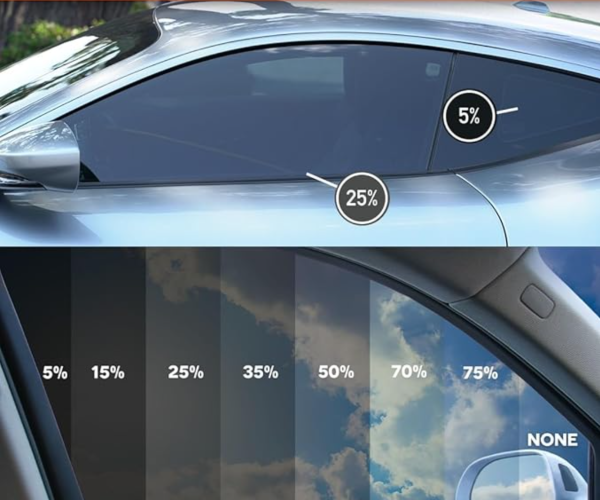
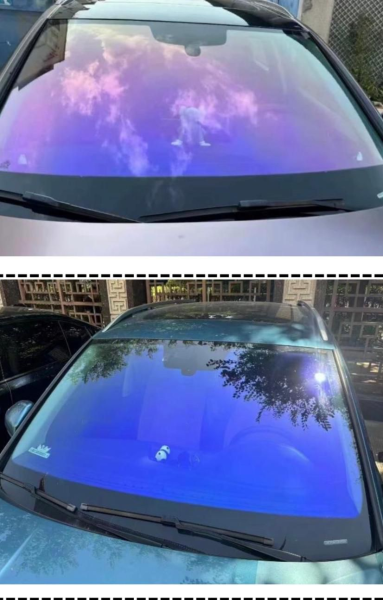
Neither of these technologies requires the film to be dark. That’s why top-tier films are often light in color or even nearly transparent — yet their heat rejection far outperforms dark films.
Part 2: Why Did the “Darker = Better” Myth Catch On?
This misconception has stuck around for some historical reasons:
Early window films genuinely relied on darkness for heat rejection. Decades ago, the technology was basically just adding dyes to the film and relying on blocking visible light to reduce heat. Back then, darker did mean better.
But technology has moved on. Today’s nano-ceramic and magnetron-sputtered films no longer depend on color for heat rejection. Yet many street-side shops and low-end products are still stuck in the dyed-film era, passing this outdated notion down from generation to generation.
There’s also a psychological factor at play. Dark film gives you a sense of “keeping the sun out” — once you’re inside, there’s less glare, so your brain assumes the heat is blocked too. In reality, glare is a visible-light issue, and heat is an infrared issue. They don’t operate on the same channel.
Part 3: What Problems Does Choosing Film Solely by Color Actually Cause?
1. Poor heat rejection. Money down the drain.
You drop two or three thousand on a set of dark film, only to find yourself sweating through summer with the AC blasting and barely making a dent. It’s not a bad installation — it’s picking the wrong product from the start.
![]()
2. Nighttime driving gets dangerous.
Dark film means low visible light transmission. Fine during the day, but at night or in the rain, your side mirrors turn into black holes. Lane changes and reversing become guesswork. And there are legal requirements too — front windshields and front side windows have mandatory minimum VLT levels. Going too dark can get you in trouble.
3. Fading and bubbling down the road.
Dark films that get their color from dyes? UV breaks those dyes down over time. After a year or two, the film turns into a transparent bubble wrap and smells foul when peeled. That’s why so many cheap dark films don’t survive past two or three summers.
Part 4: So How Should You Choose? Look at Specs, Not Color.
If color isn’t the yardstick, what is?
1. Check Total Solar Energy Rejected (TSER)
This is the most comprehensive metric. It measures how much of the entire solar energy spectrum — UV, visible, and infrared combined — is blocked. The higher the TSER, the better the heat rejection. Decent mid-to-high-end films typically fall between 40% and 60%. Just ask the seller: “What’s the TSER on this film?”
2. Check Infrared Rejection Rate (IRR)
Infrared is the heavyweight champion of heat. Good nano-ceramic films can achieve 90%+ IRR, some even 95%-99%. This is the number that determines whether your thighs get scalded when you hop in.
3. Check Visible Light Transmission (VLT)
This tells you how much light gets through, and whether you can actually see outside. Front windshields legally require ≥70% VLT. Side and rear windows can be darker if you want more privacy, but darker isn’t always better.
4. Check Ultraviolet Rejection (UVR)
99% is the industry baseline for proper products. No need to overthink this one.
Here’s the formula to remember: High TSER + High IRR + Moderate VLT = Good Film. Achieving all three simultaneously takes real technology — not just dark dye.
Part 5: A Quick Hands-On Way to Spot Good Film
If you have samples on hand, try this simple test:
Use an infrared heat lamp (or the heating lamp from a bathroom fixture) and shine it through the film onto the back of your hand. Feel how much heat passes through. Good film lets you feel almost nothing. Bad film lets the heat pour right through.
This test doesn’t rely on color at all — just direct physical sensation. It makes the difference very clear.
Frequently Asked Questions
Q1: So dark film has no advantages at all?
It does. Dark film provides better privacy — it’s harder for people outside to see into your car. If privacy is your main goal, you can choose darker film for side and rear windows. Just make sure it still has a high IRR so you don’t trade heat rejection for privacy.
Q2: Can I put dark film on my front windshield?
Not recommended. Regulations require ≥70% VLT for front windshields. Going darker isn’t just illegal — it’s genuinely dangerous. If you want heat rejection up front, choose a high-performance light-colored or clear film.
Q3: Ceramic or metallic — which is better?
Each has strengths. Ceramic films don’t interfere with signals — your phone, GPS, ETC all work fine. Metallic films have a higher heat-rejection ceiling but can affect in-car electronics. The current trend in high-end films is nano-ceramic, or ceramic+metal hybrid solutions.
In Summary
When you’re shopping for window film, don’t let color fool you. Next time you walk into a tint shop, don’t ask “How dark is this film?” Ask this instead: “What’s the TSER and IRR on this one?”
Once you see through the specs, you’ll actually get your money’s worth in heat rejection. If you’d like a deeper dive into the differences between dyed, ceramic, and metallic films, keep following this series.

 English
  العربية
  Русский
  Português