Color change car wrap installation in summer does not automatically lead to bubbling.
With premium materials, proper temperature control, and professional installation techniques, high-quality results are fully achievable even in hot conditions.
For long-lasting performance, the key lies in material quality and correct installation, not the season.
During summer, many car owners and installers worry about one common question:
Will a color change car wrap bubble in high temperatures?
The truth is, car wrap bubbling in summer is not inevitable. When the right material is used and proper installation techniques are followed, color change vinyl can still achieve a smooth, bubble-free finish—even in hot weather.
This article explains why bubbling happens in summer and shares professional high-temperature installation tips to help avoid it.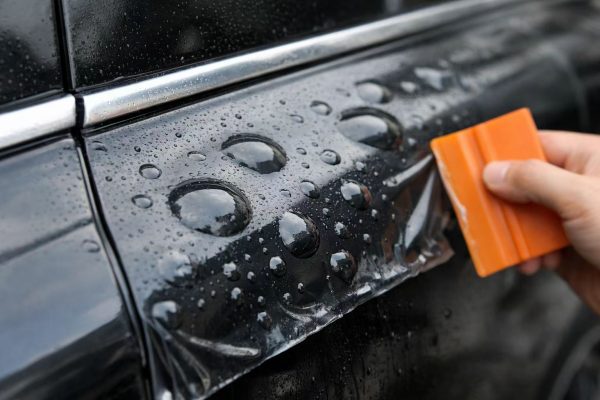
Why Does Color Change Car Wrap Bubble More Easily in Summer?
High temperatures can increase the risk of bubbling, mainly due to the following reasons:
- Adhesive Over-Activation in High Heat
Most color change car wraps use pressure-sensitive adhesive.
In excessively hot environments, the adhesive may become too soft and tacky, causing the film to bond too quickly before air is fully released—leading to trapped air bubbles.
- Humidity and Contaminants on the Paint Surface
Summer often brings higher humidity. Moisture, dust, or oil residues on the vehicle surface can easily get trapped between the wrap and the paint.
Under heat, these contaminants expand and form visible bubbles.
- Poor-Quality Vinyl Wrap Material
Low-quality color change vinyl often has:
Uneven adhesive coating
Weak heat resistance
Inefficient air-release channels
Such materials are far more likely to bubble during summer installation.
Will Color Change Car Wrap Definitely Bubble in Summer?
With proper conditions and techniques, summer can still be a suitable season for car wrap installation. In fact, many professional installers prefer warm weather because moderate heat improves vinyl flexibility and conformability.
Key factors include:
High-quality car wrap film
Controlled installation temperature
Correct installation methods
Essential High-Temperature Installation Tips for Summer
- Control the Installation Environment
Ideal installation temperature: 20°C–30°C (68°F–86°F)
Avoid installing under direct sunlight
Indoor workshops with air conditioning are strongly recommended
Keeping temperature stable is the most important step to prevent bubbling.
- Thoroughly Clean the Vehicle Surface
Wash and degrease the vehicle completely
Remove wax, oil, dust, and moisture
Pay special attention to edges, seams, and corners
A clean surface is the foundation of bubble-free installation.
- Use Heat Guns Carefully
High-temperature installation does not mean excessive heating.
Best practices:
Use low to medium heat settings
Heat evenly and gradually
Avoid overheating one area for too long
Overheating can damage the adhesive structure and increase bubbling or lifting risk.–
- Apply from the Center and Release Air Gradually
Start from the center and work toward the edges
Apply pressure evenly with a squeegee
Install large panels in sections instead of all at once
High-quality vinyl with micro air-release channels significantly reduces trapped air.![]()
- Allow Proper Post-Installation Curing
After installation:
Let the vehicle rest for 24–48 hours
Avoid washing or exposing it to extreme heat
Allow the adhesive to fully cure in a stable environment
This step is especially critical in summer.
-How to Prevent Summer Bubbling at the Source
Choosing the right color change car wrap material is the most effective long-term solution.
A high-quality wrap should feature:
Stable pressure-sensitive adhesive
Strong heat resistance
Uniform adhesive coating
Efficient air-release channel design
Good stretchability with low stress memory
These characteristics greatly reduce bubbling, edge lifting, and rework during hot-weather installation.
Conclusion
Color change car wrap installation in summer does not automatically lead to bubbling.
With premium materials, proper temperature control, and professional installation techniques, high-quality results are fully achievable even in hot conditions.
For long-lasting performance, the key lies in material quality and correct installation, not the season.

 English
  العربية
  Русский
  Português