When choosing a front windshield tint, Visible Light Transmission (VLT) is the most critical factor—not just for driving safety, but also for legal compliance. If you’re exporting automotive window films to the Middle East or Europe, understanding regional regulations can help you avoid costly mistakes and build trust with distributors.
Front Windshield Tint Light Transmission Standards: Compliance Guide for Middle East & Europe
When choosing a front windshield tint, Visible Light Transmission (VLT) is the most critical factor—not just for driving safety, but also for legal compliance. If you’re exporting automotive window films to the Middle East or Europe, understanding regional regulations can help you avoid costly mistakes and build trust with distributors.
—
What Is VLT (Visible Light Transmission)?
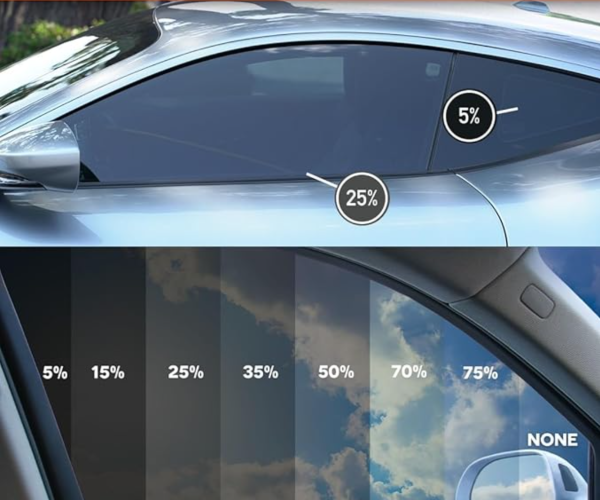
VLT refers to the percentage of visible light that passes through the glass and film combined.
Higher VLT (70%–90%) = clearer visibility, lighter tint
Lower VLT (10%–50%) = darker tint, more privacy but often illegal for windshields
For front windshields, most countries enforce strict high-VLT requirements to ensure driver visibility and road safety.
—
Middle East Windshield Tint Laws
Regulations vary slightly by country, but the trend is clear: front windshields must remain highly transparent.
Key Markets:
UAE (United Arab Emirates)
Front windshield: No tint allowed (except factory glass or top visor strip)
Side/rear windows: up to 50% tint allowed
Saudi Arabia
Front windshield: Typically prohibited
Exceptions for medical or special permits
Qatar / Kuwait / Oman
Front windshield: Generally not allowed or limited to a narrow sun strip
👉 Export Insight:
For Middle Eastern clients, recommend:
Ultra-clear films (VLT ≥ 80%)
Or no film for full compliance, depending on local enforcement
—
European Windshield Tint Regulations
Europe has stricter and more standardized rules, especially across EU countries.
Common EU Standard:
Front windshield VLT must be ≥ 75%
Some countries allow only factory-installed tint
Examples:
Germany
Windshield: ≥ 75% VLT required
Only a top sun strip is permitted
France
Windshield: ≥ 70% VLT (including glass + film)
United Kingdom
Windshield: ≥ 75% VLT
Strict roadside testing enforced
👉 Export Insight:
For Europe, compliance-focused products should be:
70%–90% VLT nano ceramic films
Certified with TÜV or ISO standards
—
Recommended Compliant Tint Types
1. Nano Ceramic Window Film
High clarity (VLT 70%–90%)
Excellent heat rejection without darkening
Non-metallic → no signal interference
👉 Best for: Europe & premium Middle East markets
—
2. Spectrally Selective Film
Blocks infrared heat while maintaining high transparency
Appears almost invisible
👉 Best for: Luxury vehicles & strict regulation zones
—
3. Factory-Matched Clear Film
Designed to maintain legal VLT when applied over OEM glass
👉 Best for: Distributors needing guaranteed compliance
—
How to Ensure Compliance Before Export
1. Check combined VLT (glass + film, not film alone)
2. Request certification reports (SGS, TÜV)
3. Understand local enforcement (some regions stricter than law)
4. Offer region-specific SKUs (e.g., 80% VLT for EU, 90% for UAE)
![]()
—
SEO Keywords to Target
front windshield tint VLT standard
legal windshield tint Europe
Middle East car tint laws
high VLT nano ceramic film
compliant auto window tint supplier
Final Thoughts
For both the Middle East and European markets, the rule is simple:
👉 The clearer, the safer—and the more compliant.
If you’re positioning your brand like WooMagicar, focusing on high VLT, high heat rejection, and certified quality will give you a strong competitive edge in global markets.

 English
  العربية
  Русский
  Português