More Than Just Longevity
While lifespan is crucial, your choice of wrap material also affects finish quality, maintenance requirements, and long-term return on investment.
Whether you choose PVC, PET, or TPU, understanding the real differences helps you make the best decision for aesthetic goals and long-term value.
By writing with clear comparison and answering real user intent, your content can rank for terms like “car wrap lifespan,” “PVC vs PET vs TPU wrap,” “how long do car wraps last,” and more — improving visibility and conversion potential on Google.
How Long Does a Car Wrap Last? Material Lifespan Comparison: PVC vs PET vs TPU
When choosing a car wrap, one of the most important questions for vehicle owners and installers is: “How long will it last?”
The lifespan of a car wrap depends heavily on the material used. Different wrap films have varying durability, UV resistance, flexibility, and wear characteristics.
In this article, we compare the three most common car wrap materials used in today’s automotive film industry: PVC (Polyvinyl Chloride), PET (Polyethylene Terephthalate), and TPU (Thermoplastic Polyurethane). By understanding the differences, you can choose the right wrap for longevity, value, and performance.
—
Why Car Wrap Lifespan Matters
Before diving into materials, it’s essential to understand what “lifespan” means in the context of vehicle wrap film.
A car wrap’s lifespan refers to how long the film can maintain:
• Color stability
• Gloss or matte finish
• Adhesion performance
• Weather resistance
• Scratch and abrasion resistance
A longer-lasting wrap means better protection for the original paint, lower maintenance costs, and higher resale value for the vehicle. In SEO terms, users searching for longevity-related terms (such as “how long do car wraps last” or “best car wrap lifespan”) are often ready to buy or install — so your content should answer clearly and directly.
—
PVC Car Wrap: Budget-Friendly and Widely Used
PVC (Polyvinyl Chloride) is the most commonly used material in vehicle wraps. PVC films are known for their affordability and ease of installation, making them a favorite for many installers and daily drivers.
Expected Lifespan of PVC Film
On average, a quality PVC car wrap can last:
3 – 7 years
This depends on:
• UV exposure
• Climate conditions
• Washing and maintenance habits
• Quality of installation
PVC wraps typically have good color options and surface finishes (gloss, matte, metallic). However, they are more prone to:
• UV fading over time
• Edge lifting on complex curves
• Plasticizer migration in extreme heat
PVC is a reliable choice for users who want cost-effective aesthetic upgrades and decent protection without paying premium prices.
—
PET Car Wrap: Enhanced Gloss and Better UV Resistance
PET (Polyethylene Terephthalate) is a stronger, more rigid film often used for paint protection films (PPF) and high-gloss wraps.
Expected Lifespan of PET Film
A high-quality PET wrap usually lasts:
5 – 8+ years
PET film offers:
• Excellent UV resistance
• Better gloss retention
• Higher resistance to environmental degradation
• Stronger surface hardness than PVC
PET films are more resistant to yellowing and discoloration under long-term sunlight exposure. Because of their molecular structure, PET wraps maintain their appearance longer than standard PVC films, especially in:
• Hot climates
• Coastal areas
• Frequent outdoor parking scenarios
With longer lifespan and superior finish, PET is often chosen for premium wraps and high-end vehicles.
![]()
—
TPU Car Wrap: Premium Durability and Flexibility
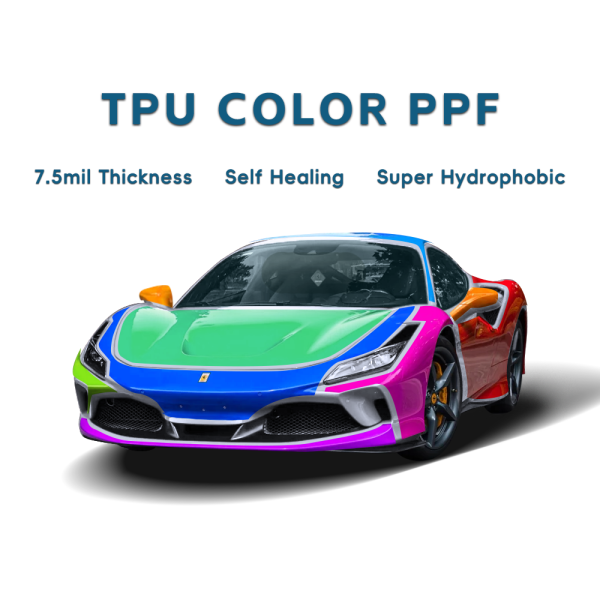
TPU (Thermoplastic Polyurethane) is the latest generation of wrap material. TPU films combine elasticity, high scratch resistance, and excellent memory — making them ideal for complicated installations and long-term durability.
Expected Lifespan of TPU Film
When properly installed, TPU wraps can last:
7 – 10+ years
This impressive lifespan results from TPU’s superior material properties:
• High resistance to abrasion and scratching
• Outstanding UV stability
• Elastic recovery for curves and edges
• Strong chemical resistance
TPU films maintain integrity longer and resist environmental aging better than both PVC and PET under comparable conditions. This makes TPU the preferred choice for:
• Ultra-premium wraps
• High-performance vehicles
• Long-term car protection solutions
Although TPU films are more expensive, their long service life and rugged performance often justify the cost — especially for owners who keep vehicles for many years.
—
Material Lifespan Summary
To summarize the typical lifespan ranges:
PVC Car Wrap: 3–7 years
PET Car Wrap: 5–8+ years
TPU Car Wrap: 7–10+ years
These ranges represent average conditions. Actual performance will vary based on:
• Climate and UV exposure
• Vehicle storage conditions
• Maintenance routine
• Quality of film and installation
—
Factors That Affect Car Wrap Lifespan
No matter the material, several factors influence how long a wrap lasts:
UV Exposure
Direct sunlight accelerates fading and breakdown of polymers.
Climate Conditions
Humid, hot, or salty environments can shorten wrap life.
Installation Quality
Poor installation leads to edge lifting, premature peeling, and reduced longevity.
Maintenance Routine
Gentle washing and correct cleaning products extend wrap lifespan.
By optimizing these factors, users can maximize the durability of PVC, PET, or TPU films.
—
Which Wrap Material Should You Choose?
PVC – Best for budget-conscious buyers who want style and protection without a premium price tag.
PET – Great for those who want a glossier finish and extended lifespan compared to PVC.
TPU – Ideal for those seeking the longest lifespan and highest performance, especially for high-end vehicles and long-term ownership.
—
Final Thoughts: More Than Just Longevity
While lifespan is crucial, your choice of wrap material also affects finish quality, maintenance requirements, and long-term return on investment.
Whether you choose PVC, PET, or TPU, understanding the real differences helps you make the best decision for aesthetic goals and long-term value.
By writing with clear comparison and answering real user intent, your content can rank for terms like “car wrap lifespan,” “PVC vs PET vs TPU wrap,” “how long do car wraps last,” and more — improving visibility and conversion potential on Google.

 English
  العربية
  Русский
  Português