Paint Protection Film Stretch Test: Which Material Fits Complex Car Bodies?
Academy / Car Paint Protection Film
When it comes to protecting your car’s paint, especially for models with complex body curves (such as sports cars, luxury SUVs with sculpted fenders, or classic cars with unique contours), choosing the right paint protection film (PPF) material is crucial. A key factor in determining whether a PPF can adapt to complex body shapes is its stretchability—this is where PPF stretch testing becomes the core evaluation standard. In this article, we will deeply explore the relationship between PPF stretch performance and complex body adaptation, compare the stretch characteristics of different materials, and help you accurately select the most suitable PPF for your car.
Why Is PPF Stretch Test Critical for Complex Car Bodies?
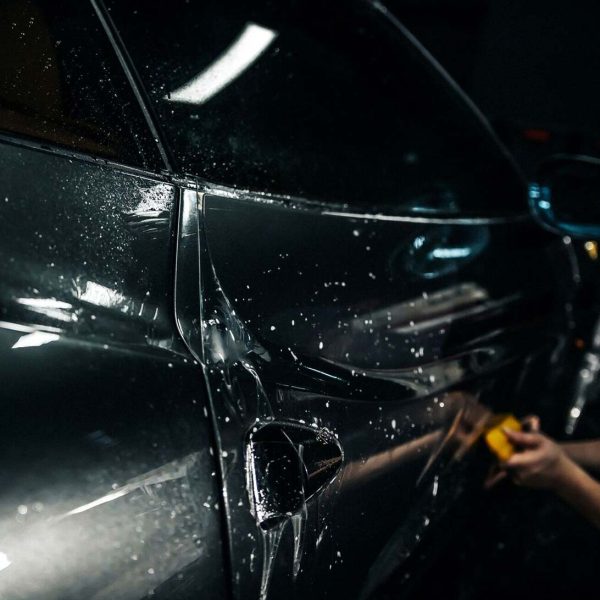
Complex car bodies are often designed with irregular curves, sharp edges, and concave-convex transitions. When installing PPF on these parts, the film needs to be stretched to fit the body shape without tearing, wrinkling, or losing adhesion. The stretch test directly reflects two core performances of PPF that are essential for complex bodies:
Elongation at break: It refers to the maximum percentage that the PPF can stretch before breaking. A higher elongation rate means the film can better fit extreme curves without cracking, which is vital for parts with large curvature changes.
Recovery performance: After stretching and fitting the body, the PPF should have a certain recovery ability to avoid permanent deformation. Poor recovery will lead to wrinkles or edge lifting over time, affecting both the appearance and protection effect.
In practical installation, PPF that fails the stretch test often has problems such as tearing during fitting, uneven film application, or edge warping after a period of use. For high-value cars with complex bodies, these issues not only damage the aesthetic feeling but also may fail to protect the paint from scratches, stone chips, and other damages. Therefore, the stretch test results are an important basis for judging whether a PPF is suitable for complex car bodies.
Common PPF Materials: Stretch Performance Comparison
Currently, the mainstream PPF materials on the market are mainly divided into three categories: PVC (Polyvinyl Chloride), TPU (Thermoplastic Polyurethane), and TPU with self-healing coating. Their stretch performances vary greatly, which directly determines their adaptability to complex car bodies. Let’s analyze them one by one through stretch test data and practical performance:
1. PVC Paint Protection Film: Low Stretchability, Not Suitable for Complex Bodies
PVC is the earliest used PPF material, with the advantages of low cost and simple production. However, its stretch performance is relatively poor. According to the standard stretch test, the elongation at break of PVC PPF is usually between 150%-200%. When stretched to fit complex curves, it is easy to reach the breaking limit, resulting in tearing. Moreover, PVC has poor recovery performance—after stretching, it is prone to permanent deformation, leading to wrinkles that are difficult to eliminate during installation.
Practical application: PVC PPF is only suitable for cars with simple body lines (such as commercial vehicles or economical sedans with flat surfaces). For parts with large curvature such as sports car fenders and rear spoilers, it is difficult to fit closely, so it is not recommended for complex car bodies.
2. Ordinary TPU Paint Protection Film: Improved Stretchability, Basic Adaptation to General Complexity
TPU material has obvious advantages over PVC in terms of elasticity and toughness. The elongation at break of ordinary TPU PPF can reach 300%-400% through stretch tests. It has good ductility and can be stretched to a greater extent when fitting curved parts, reducing the risk of tearing. At the same time, TPU has excellent recovery performance—after stretching, it can quickly return to its original state, effectively avoiding permanent deformation and ensuring a smooth fit.
Practical application: Ordinary TPU PPF can meet the installation needs of most cars with moderately complex bodies, such as mainstream luxury sedans and mid-size SUVs. It can well fit parts such as front bumpers and door edges with general curvature. However, for cars with extremely complex body designs, the stretch performance of ordinary TPU may still be insufficient.
3. TPU with Self-Healing Coating: High Stretchability + Comprehensive Protection, Ideal for Complex Bodies
TPU with self-healing coating is the high-end product in the current PPF market. On the basis of ordinary TPU, it adds a special self-healing coating, and its stretch performance is further optimized. The elongation at break of this type of PPF can reach more than 450% in stretch tests, and some high-end products can even reach 500%. Its ultra-high ductility allows it to be freely stretched to fit extreme curves and sharp edges without tearing, and the recovery performance is more excellent—even after repeated stretching during installation, it can still maintain a smooth surface.
In addition to excellent stretch performance, the self-healing coating also has the function of automatically repairing minor scratches, which further enhances the protection effect for complex car bodies (parts with complex contours are more likely to be scratched). Practical application: This type of PPF is the first choice for supercars (Ferrari, Lamborghini), luxury sports SUVs (Porsche Cayenne Coupe), and classic cars with unique body lines. It can perfectly fit all complex parts and provide long-term stable protection.
Key Indicators of PPF Stretch Test to Pay Attention to for Complex Car Bodies
When selecting PPF for complex car bodies, it is not enough to only look at the material type; you also need to focus on the following key indicators in the stretch test to ensure that the product meets the actual installation needs:
Elongation at break: As the core indicator, it is recommended to choose products with an elongation at break of more than 400% for complex car bodies, and more than 450% for supercars with extreme curves.
Stretch strength: It refers to the force required when the PPF is stretched to break. High stretch strength means that the film is not easy to tear during the stretching process, which is especially important for parts that need to be stretched repeatedly during installation.
Recovery rate: It is recommended to choose products with a recovery rate of more than 90%. A high recovery rate can ensure that the film does not leave wrinkles or deform after fitting the body.
Low-temperature stretch performance: Because the PPF will become hard in a low-temperature environment, which affects its stretchability. For areas with low winter temperatures, it is necessary to choose products that still have good stretch performance at -10℃ to 0℃.
Installation Tips for PPF on Complex Car Bodies (Cooperating with Stretch Performance)
Even if you choose a PPF with excellent stretch performance, correct installation methods are also crucial to ensuring the fitting effect. Here are some professional installation tips for complex car bodies:
Pre-heating treatment: Before installation, pre-heat the PPF and the body surface with a heat gun (temperature controlled at 60-80℃). Proper heating can enhance the ductility of the PPF and make it easier to stretch and fit.
Segmented stretching: For parts with large curvature, avoid one-time excessive stretching. Instead, use segmented stretching and fitting to gradually adapt the film to the body contour, reducing the risk of tearing.
Edge trimming: For sharp edges (such as fender edges and spoiler edges), after stretching and fitting, trim the edges in time and press them firmly to ensure that the edges are tightly attached and avoid lifting.
Post-heating shaping: After the entire film is fitted, use a heat gun to heat the film again and shape it, which helps the PPF to recover and fit more closely to the body.
Conclusion: The Best Material for Complex Car Bodies Is High-Stretch Self-Healing TPU
Through the analysis of PPF stretch test results and practical application effects, it is not difficult to draw a conclusion: for complex car bodies, TPU with self-healing coating is the most suitable material. Its ultra-high elongation at break (more than 450%), excellent recovery performance, and self-healing protection function can perfectly solve the problems of difficult fitting, easy tearing, and poor durability of PPF on complex curves.
When purchasing, remember to check the stretch test report of the product, focus on key indicators such as elongation at break and recovery rate, and cooperate with professional installation techniques. In this way, you can not only ensure that the PPF fits the complex body perfectly but also provide long-term and effective protection for the car paint, maintaining the value and aesthetic feeling of the car.
Contact me
WooMagicar serves 300+ 4S stores and regional dealers, offering factory-direct supply, bulk discounts, free sample testing, customized product selection and exclusive regional cooperation. Contact me anytime for supply cycles, warranty terms or offline cooperation.

 English
  العربية
  Русский
  Português