Must-Read for Car Owners in Rainy Regions: How to Choose a Paint Protection Film that Resists Water Spots?
Academy / Car Paint Protection Film
In rainy regions, the priority for selecting Paint Protection Film should be:
Coating Density (Anti-penetration) > Hydrophobicity (Anti-water retention) > Aliphatic TPU Substrate > Thickness
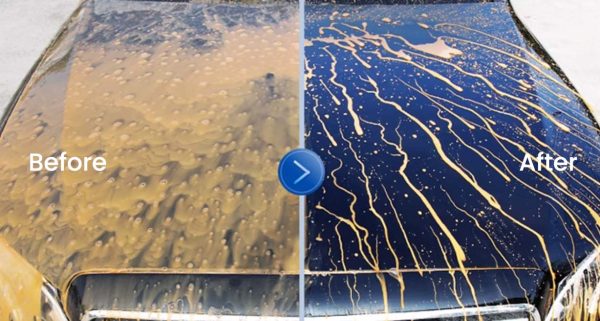
If you live in a rainy belt, a coastal city, or frequently face continuous rainy weather, you may encounter a headache-inducing problem: stubborn “rain spots” or “water stains” appearing on your newly installed Paint Protection Film (PPF).
For car owners in rainy regions, selecting a PPF isn’t just about thickness and gloss; “water spot resistance” is the core indicator determining the film’s lifespan. Today, let’s discuss how to choose a truly durable Paint Protection Film for humid climates.
Why are Rainy Regions the “Nemesis” of Paint Protection Film?
Before diving into the buying guide, we need to understand how rain damages the film.
* Acid Rain Corrosion: Rainwater in developed industrial or urban areas is usually weakly acidic. If the film’s coating has weak corrosion resistance, acid rain will penetrate through micropores, leading to aging and yellowing of the coating or even the substrate.
* Water Spot Effect (Lens Effect): Sunshine after rain is the biggest killer of PPF. Water droplets remaining on the paint act like “convex lenses,” focusing the heat from sunlight. If the film has poor hydrophobicity and water droplets don’t slide off, the high heat will rapidly evaporate the moisture, “etching” minerals (calcium, magnesium) from the rainwater into the coating, forming permanent water spots.
Core Buying Guide: Focus on These 4 Points for Rainy Regions
Addressing the above issues, car owners in rainy regions must focus on assessing the following four technical indicators when selecting Paint Protection Film:
1. Hydrophobicity (Lotus Effect) is the First Line of Defense
In rainy regions, Hydrophobicity isn’t just for aesthetics; it’s for survival.
* Check the Contact Angle: High-quality film coatings simulate the nanostructure of a lotus leaf. The larger the contact angle between the water and the film surface (usually recommended to be greater than 105°), the rounder the water beads, and the faster they roll off.
* Self-Cleaning Ability: Excellent hydrophobicity means rainwater lands on the car and slides off quickly, taking dust with it, and is less likely to leave water droplets behind, thereby reducing the chance of water spot formation at the source.
2. Coating Density: The Key to Preventing Penetration
Ordinary coating structures on the market are relatively loose, allowing water molecules to penetrate easily. In rainy regions, you must choose products with high coating density.
* Nano-Coating Technology: Look for brands using dense nano-coating technology. This coating has extremely small molecular gaps, effectively blocking the penetration of acid rain and minerals. It not only resists corrosion but also significantly improves the film’s stain resistance.
* Test Method: When testing at the store, use an oil-based marker to draw on the film surface. If it can be wiped off easily after drying without leaving marks, it indicates the coating is dense and has strong anti-penetration capabilities.
3. Substrate Selection: Must be Aliphatic TPU
This is the bottom line. Regardless of the region, you must choose TPU (Thermoplastic Polyurethane) material and firmly reject PVC or TPH.
However, there are quality differences within TPU. For rainy regions, it is recommended to confirm the substrate is Aliphatic TPU.
* Hydrolysis Resistance: Compared to Aromatic TPU, the molecular structure of Aliphatic TPU is more stable. It is extremely difficult for a hydrolysis reaction to occur in high-temperature and high-humidity environments, fundamentally ensuring the film won’t turn into powder or crack due to long-term rain exposure.
4. Specific Warranty Terms
Before purchasing, be sure to check the brand’s electronic warranty card in detail.
* Does it cover “Water Spots”? Many brands’ warranty scopes only include “no blistering, no delamination, no yellowing.” Brands that dare to promise “no unrepairable water spots/rain stains during the warranty period” usually have more confidence in their coating technology.
Tips to Avoid Pitfalls: Maintenance Advice for Rainy Regions
Choosing the right film is important, but later maintenance is equally crucial. Even the best film can “fail” in rainy regions if you ignore these two points:
* Wash the car as soon as possible after rain: Do not let rainwater air dry naturally! Mineral residues left after rainwater evaporation are the culprit of water spots. If conditions permit, rinsing the car body after rain is the most effective maintenance.
* Regularly apply film maintenance liquid (Sealant): It is recommended to use a dedicated film maintenance liquid (sealant) every 2-3 months. This is equivalent to putting another “raincoat” on the film’s coating, filling the coating’s micropores and restoring hydrophobicity.
Summary
In rainy regions, the priority for selecting Paint Protection Film should be:
Coating Density (Anti-penetration) > Hydrophobicity (Anti-water retention) > Aliphatic TPU Substrate > Thickness
Do not blindly pursue the thickness of the film; a dense, smooth, high-tech coating is the best weapon against continuous rainy weather.
Contact me
WooMagicar serves 300+ 4S stores and regional dealers, offering factory-direct supply, bulk discounts, free sample testing, customized product selection and exclusive regional cooperation. Contact me anytime for supply cycles, warranty terms or offline cooperation.

 English
  العربية
  Русский
  Português