Full Car vs Partial Paint Protection Film: A Cost-Effective Guide
Academy / Car Paint Protection Film
Full car or partial paint protection film? The best choice depends on your budget and usage needs. Full car PPF provides complete protection, better appearance consistency, and higher long-term value—ideal for new or high-end vehicles. Partial PPF focuses on high-impact areas like the front bumper and hood, offering effective protection at a lower upfront cost. Regardless of coverage, high-quality TPU paint protection film with self-healing and anti-yellowing properties is essential for lasting performance and cost-effectiveness.
As car ownership continues to grow, more drivers are paying attention to how to protect their vehicle’s paintwork. Paint Protection Film (PPF) has become a popular solution thanks to its ability to prevent scratches, stone chips, chemical damage, and UV aging.
One common question many car owners ask is:
👉 Should you install PPF on the entire vehicle or only on key areas?
This article compares full car PPF vs partial PPF from the perspectives of cost, protection level, use cases, and overall value—helping you choose the most cost-effective solution.
—
What Is Full Car Paint Protection Film?
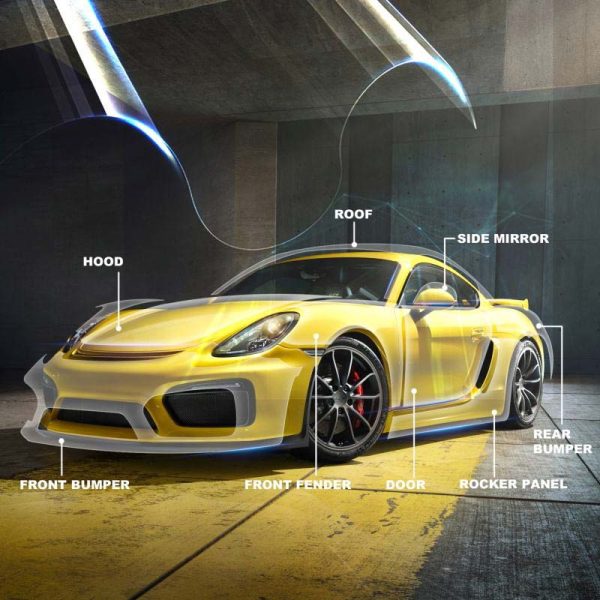
Full car PPF installation means applying paint protection film to all painted exterior surfaces of the vehicle, including the front bumper, hood, doors, fenders, and rear bumper.
Advantages of Full Car PPF
✅ Complete, all-around protection
✅ Prevents scratches, stone chips, bird droppings, and chemical stains
✅ Slows down paint aging and oxidation
✅ Maintains vehicle appearance and resale value
✅ Seamless, uniform look
Disadvantages
❌ Higher initial investment
❌ Requires high-quality film and professional installation
👉 Best for:
New cars
Luxury or high-value vehicles
Owners planning long-term use
—
What Is Partial Paint Protection Film?
Partial PPF installation focuses on high-impact and high-risk areas, such as:
Front bumper
Partial hood
Side mirrors
Door handles
Door edges and sills
Advantages of Partial PPF
✅ Lower upfront cost
✅ Protects the most vulnerable areas
✅ Faster installation
Disadvantages
❌ Limited protection coverage
❌ Visible film edges in some cases
❌ Less consistent appearance
👉 Best for:
Budget-conscious drivers
Daily city commuters
Vehicles already in use for some time
—
Recommended Cost-Effective Solutions
Option 1: Full Car TPU PPF for New Vehicles
One-time investment with long-term protection
Reduces future repainting and repair costs
Ideal for light-colored, metallic, or pearl finishes
Option 2: Reinforced Partial
CoverageFront bumper + hood + mirrors
Strong protection at a lower cost
Practical and efficient for daily use
Option 3: Start Partial, Upgrade Later
Apply PPF to key areas first
Upgrade to full coverage when budget allows
Flexible and budget-friendly approach
—
Film Quality Matters More Than Coverage
Whether you choose full or partial coverage, PPF quality is the most important factor. A reliable paint protection film should offer:
✔ TPU base material
✔ Self-healing capability
✔ Strong resistance to yellowing
✔ High optical clarity with minimal orange peel
Low-quality film may fail to protect your paint—even with full coverage.
—
Conclusion
There is no one-size-fits-all answer to choosing between full car or partial paint protection film. The best option depends on your budget, driving environment, and how long you plan to keep the vehicle.
For long-term protection and a flawless appearance, full car PPF is the ideal solution. For cost control and targeted protection, partial PPF remains a smart choice.
Choosing the right installation strategy—combined with high-quality TPU paint protection film—ensures maximum value, protection, and peace of mind.
Contact me
WooMagicar serves 300+ 4S stores and regional dealers, offering factory-direct supply, bulk discounts, free sample testing, customized product selection and exclusive regional cooperation. Contact me anytime for supply cycles, warranty terms or offline cooperation.


 English
  العربية
  Русский
  Português