Car Paint vs. Vinyl Wrap: Thinking of Changing Colors?
Academy / Colorful Car Wrap Vinyl Film
Are you bored with your current car color and looking for a change of mood? Or perhaps the paint shows signs of aging, and you want to give your ride a fresh, new look?
Standing at this crossroads of “automotive makeovers,” almost every car owner wrestles with the same dilemma: Is it better to get a full body respray (paint) or install a vinyl wrap?
Are you bored with your current car color and looking for a change of mood? Or perhaps the paint shows signs of aging, and you want to give your ride a fresh, new look?
Standing at this crossroads of “automotive makeovers,” almost every car owner wrestles with the same dilemma: Is it better to get a full body respray (paint) or install a vinyl wrap?
This isn’t just a question of aesthetics; it is a serious financial calculation. As observers of the automotive industry, we have compared the difficulty of application, the impact on vehicle depreciation, and long-term maintenance costs. Our conclusion is clear: For 90% of private car owners, choosing a Vinyl Wrap is a far more cost-effective and rational choice than repainting.
Below, we break down exactly why, looking beyond just the price tag. 1. Traditional Respray: Seemingly Permanent, But with Huge “Hidden Costs”
A full body respray is the traditional method for changing colors. Many people believe paint is more “solid” or permanent. However, unless you are restoring a vehicle with severe body damage, a full respray is often a case of “losing more than you gain.”
First, you must face the reality of irreversible damage.
The biggest drawback of painting is that it requires destroying your precious Original Equipment Manufacturer (OEM) paint. To make the new paint adhere, technicians must sand down your factory clear coat and paint. Factory paint undergoes high-temperature baking during manufacturing, giving it hardness, gloss, and rust protection that no aftermarket paint job (even at a dealership) can fully replicate. Once you sand it off, there is no going back.
Second, there is the painful hit to your Resale Value.
This is the “hidden cost” most owners overlook. When you eventually sell your car, dealers will use a paint depth gauge. If they detect the entire car has been repainted, they will immediately suspect a major accident. This suspicion alone can shrink your trade-in valuation by 10% – 20%. Effectively, you pay for the paint job now, and you pay again when you sell the car.
Finally, consider the long downtime.
A quality full-body paint job requires disassembly, sanding, priming, painting, clear-coating, and baking. A standard professional process takes at least 7 to 15 days. This means you will be without a car for half a month—a massive inconvenience for daily commuters. 2. Vinyl Wrap: Versatility Meets Asset Protection
Vinyl wrapping has become the dominant trend in car customization not just because of the color options, but because it aligns with modern “asset management” thinking.
It acts as a “Bodyguard” for your OEM Paint.
A vinyl wrap is more than just a color change; it is a physical shield. It seals the car, protecting it from acid rain, bird droppings, UV rays, and the “swirl marks” caused by improper washing. It even defends against minor rock chips and road debris. When you peel the wrap off years later, the paint underneath looks brand new. This is crucial because it effectively locks in the car’s remaining value.
It offers high “Forgiveness” and Reversibility.
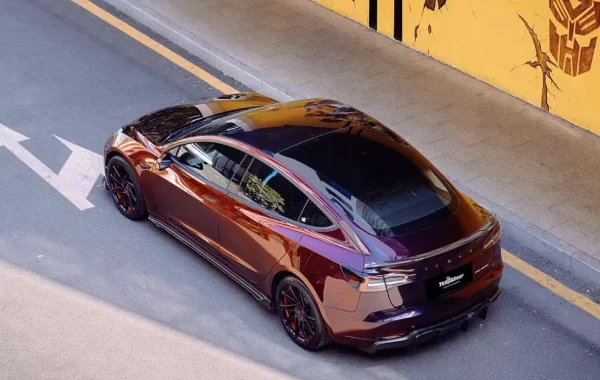
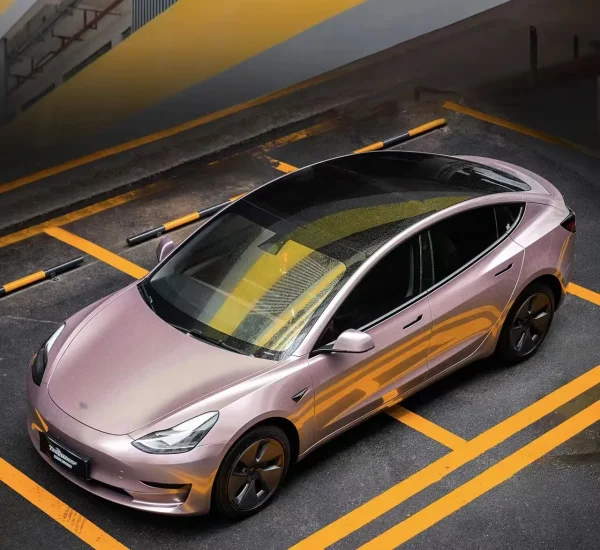
Do you want Satin Black? Liquid Metal Silver? Color-shifting Chrome? These textures are incredibly difficult and expensive to achieve with paint. Most importantly, if you get tired of the color, or if you need to return the car to stock to sell it, you simply pay a small fee to remove the film. This “reversibility” gives owners total freedom without the psychological burden of a permanent alteration.
It saves you precious time.
Wrapping a car typically takes only 1 to 3 days. Compared to the weeks required for painting, the disruption to your daily life is minimal. 3. The Final Verdict: Why Wrapping Wins the Value War
If we calculate the total ledger—combining explicit costs and implicit risks—the gap is significant.
Let’s assume you want to change the color of a car worth $30,000. In terms of direct upfront costs, a high-quality paint job and a premium vinyl wrap might be in a similar price bracket (ranging from $2,500 to $5,000 depending on quality).
However, Vinyl Wrap wins decisively on “Stop-Loss.”
If you choose Paint: Aside from the initial cost, you must accept a potential loss of thousands of dollars in depreciation when you sell the car, plus the cost of alternative transport for two weeks. It is an expensive indulgence.
If you choose Wrap: For the same upfront cost, you get a custom look and you essentially get free paint protection. When you sell the car in the future, the pristine factory paint underneath will help you command a higher price than similar cars on the market. In essence, you get to enjoy a custom color for a few years for free, because the wrap pays for itself by preserving the car’s value.
Conclusion
Vinyl Wrap is the smarter financial move.
While the entry price might look similar to painting, wrapping is a strategy of “Offense (Cool aesthetics) + Defense (Value retention).” It satisfies your desire for personalization while providing the maximum protection for your wallet.
Contact me
WooMagicar serves 300+ 4S stores and regional dealers, offering factory-direct supply, bulk discounts, free sample testing, customized product selection and exclusive regional cooperation. Contact me anytime for supply cycles, warranty terms or offline cooperation.

 English
  العربية
  Русский
  Português